



Online shopping has become a defining feature of modern consumer life in Europe. Each year, more than 10 billion e-commerce parcels are delivered across the EU — and the vast majority of their packaging is discarded after just one use. While recycling helps, the system remains largely linear: use once, dispose, repeat.
LIFE RE-ZIP is challenging this model.
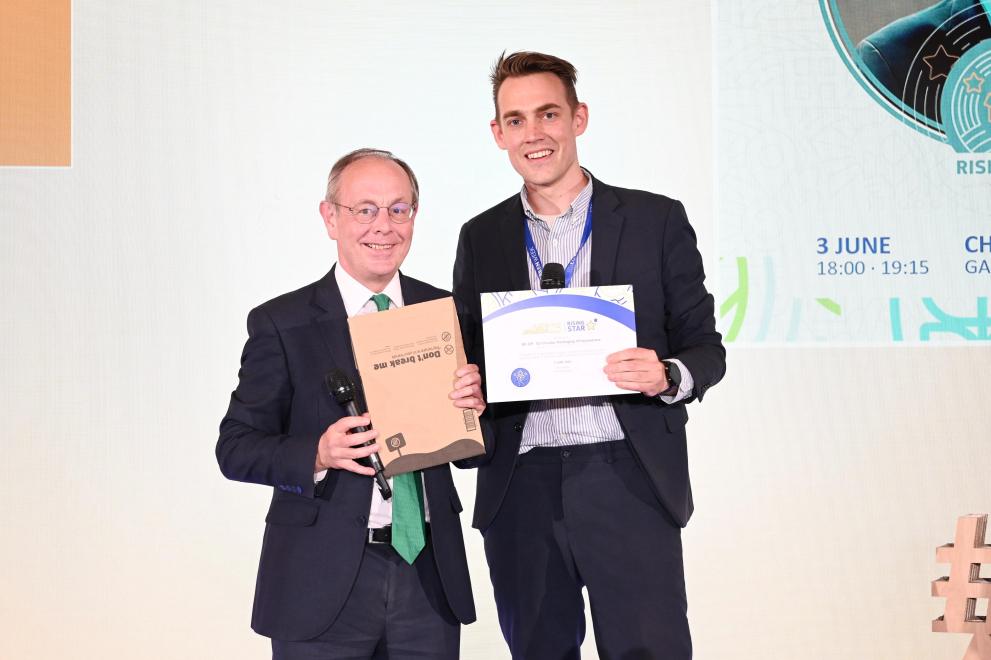
Recognised as a Rising Star at the LIFE Awards 2025, the LIFE RE-ZIP project introduces a bold alternative: a circular packaging system designed specifically for the realities of modern e-commerce. Backed by a €3.4 million investment and running through November 2026, the three-year initiative replaces single-use cardboard with durable, reusable shipping packages that circulate across multiple European countries.
From Waste to Circulation
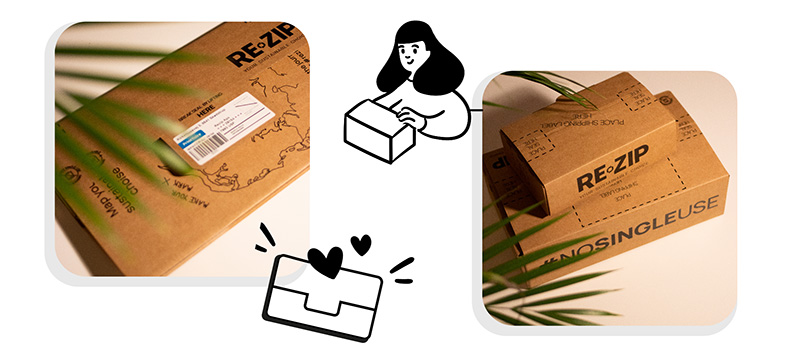
At the heart of LIFE RE-ZIP is a simple but powerful idea: packaging should not be waste — it should be a resource. After receiving their online order, consumers return the empty packaging at a convenient Pick-Up and Drop-Off (PUDO) point, easily located using the RE-ZIP app. From there, the packaging re-enters the logistics system, ready to be reused multiple times.
This shared infrastructure allows packaging to move seamlessly across borders, significantly reducing both material consumption and carbon emissions associated with single-use cardboard production.
As project coordinator Daniel Nygaard explains:
“It’s a cultural thing. People look at a cardboard package and just see a single-use product that can be thrown into the trash for recycling. Until now, the entire economy has been based on linear thinking — but now we have a circular solution.”
He adds that the LIFE Programme made it possible to build the return logistics infrastructure needed to keep packaging circulating across Europe, refurbished and reintroduced into the market rather than discarded.
Measurable Impact at Scale
The LIFE Awards jury highlighted LIFE RE-ZIP for its strong alignment with EU policy priorities and its tangible contribution to the circular economy. By the time the project concludes in 2026, it is expected to deliver substantial environmental and social benefits:
- Over 120 million reusable packages in circulation
- 17,000 tonnes of cardboard and plastic waste avoided
- 12,000 m³ of water consumption reduced
- 18,000 tonnes of CO₂ emissions cut
- More than 300 new jobs created
- Return rates exceeding 75%
These figures demonstrate that circular solutions can scale — not just in theory, but in real-world consumer systems.
Making Circularity Effortless for Consumers
A key success factor of LIFE RE-ZIP is its focus on ease and convenience. The project simplifies the circular experience into a five-step journey:
- Shop online
- Receive the package
- Find a nearby drop point
- Return the packaging
- Claim a reward
As the RE-ZIP app puts it: “We’ve made returning your packaging a no-brainer.” With a dense network of drop points — including post offices, mailboxes, and other everyday locations — participation fits seamlessly into daily routines.
Bringing the Circular Economy Closer to Citizens
Beyond logistics and metrics, LIFE RE-ZIP plays an important role in making the circular economy visible and tangible. According to Patrick Child, Acting Director-General at DG Environment:
“LIFE RE-ZIP makes the circular economy really visible, tangible and direct at a time when we are all thinking about how we can improve sustainability and reduce our material footprint. Bringing that really close to citizens’ awareness is very, very important.”
In a world where sustainability can sometimes feel abstract, LIFE RE-ZIP demonstrates how small, everyday actions — like returning a package — can contribute to systemic change.
A Glimpse of the Future
As e-commerce continues to grow, initiatives like LIFE RE-ZIP show what the next phase of the circular economy can look like: consumer-friendly, digitally enabled, and scalable across borders. By rethinking packaging as a service rather than a disposable product, LIFE RE-ZIP offers a compelling model for how Europe can move beyond recycling — and toward true circularity.
Source: European Climate, Infrastructure and Environment Executive Agency (CINEA)

No responses yet